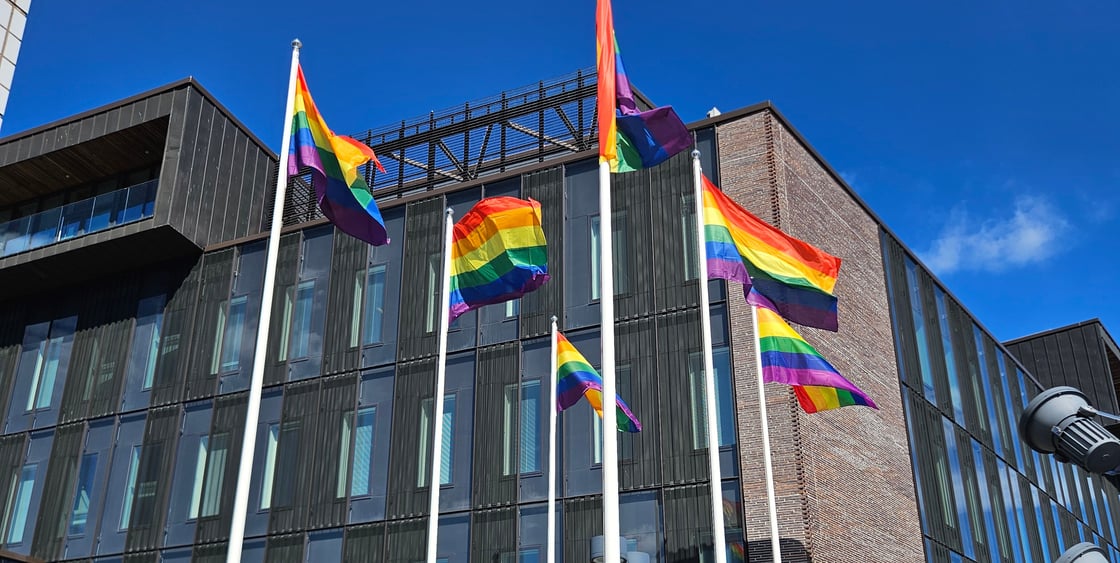
The figures from the Finnish Institute for Health and Welfare (THL) school health survey are not merely statistics. They are young people sitting in classrooms, attending hobbies, and moving through our municipality every day. On 9 March 2026, Kirkkonummi municipal council voted 30–14 in favour of rainbow flag-flying. The decision is a small one. Its significance for the young people it was made for is not.
What does the THL school health survey tell us about rainbow young people?
THL’s school health survey shows that one in five lower secondary school pupils belonging to a gender minority has experienced repeated bullying, at least once a week. Among sexual minorities, the figure is one in seven. Compared to other young people, the rate of bullying is two to three times higher.
These figures are troubling on their own terms. It is also important to note that they concern young people who have had the courage to respond to the survey disclosing their own identity. Not everyone does.
Since 2023, the situation has not improved. It has worsened. This does not happen in a vacuum: the social climate in many countries, including Finland, has hardened in terms of public discourse directed at LGBTQ+ people. When intolerance is normalised in public debate, it is reflected directly also in the everyday lives of young people in Kirkkonummi.
Why is flag-flying more than symbolism?
Research consistently shows that the wellbeing of rainbow young people is supported above all by two things: the experience of being accepted and visibility — the knowledge that one is not alone.
When a young person sees that their municipality acknowledges their existence, it is not an empty gesture. It is a message: you belong here.
Community acceptance is research-evidenced as associated with a lower risk of depression, reduced loneliness, and better school attendance. When a municipality visibly demonstrates that it values all its residents, it is conducting preventive mental health work without a separate programme or a dedicated budget line.
A flag is not an internal report or a strategy document. It is a visible, physical message that every passerby can observe. That is precisely why its significance is greater than its physical size would suggest.
How did the flag-flying decision come about in Kirkkonummi?
The flag-flying decision arose from my council initiative on annual rainbow flag-flying, which the council approved in March. At the 9 March session I delivered a council speech and put forward the same argument I am repeating here: the cost of a small gesture is minimal, but its effect on the young people it concerns may be immeasurable. As I have written about more broadly: with words and gestures we shape the reality we live in.
The voting result of 30–14 shows that the majority of councillors understood the figures and made their decision on that basis. The municipality’s own strategy commits to equality and non-discrimination; the kuntalaki (Local Government Act) requires promoting the wellbeing of residents. The flag-flying decision translates these commitments into practice.
What does a small gesture cost compared to the costs of social exclusion?
A flag costs a few dozen euros. The societal costs of a marginalised young person (lost working years, social services, healthcare) run to tens of thousands of euros per person; in some calculations considerably more.
Prevention is always cheaper. This holds as true for youth work as it does for healthcare.
I am not claiming that flag-flying alone resolves the wellbeing challenges faced by rainbow young people. It does not. What is needed is concrete anti-bullying work in schools, sufficient access to school counsellors and psychologist services, and a community culture in which difference is accepted, not merely permitted. The flag is a starting point. It communicates the direction in which the municipality intends to develop and creates an obligation to continue in that direction.
Kirkkonummi is more equal today than it was yesterday. That is not an endpoint — it is a starting gun. How many more small gestures are still waiting to be made?
Frequently asked questions
What does the THL school health survey tell us about rainbow young people?
According to THL school health survey data, one in five lower secondary school pupils belonging to a gender minority has experienced repeated bullying at least once a week. Among sexual minorities, the figure is one in seven. Bullying is two to three times more common than among other young people.
Why is flag-flying more than symbolism?
Research shows that the wellbeing of rainbow young people is supported above all by the experience of being accepted and visibility. Community acceptance is associated with a lower risk of depression, reduced loneliness, and better school attendance.
How did the flag-flying decision come about in Kirkkonummi?
The decision arose from a council initiative on annual rainbow flag-flying. Kirkkonummi municipal council voted 30–14 in favour of flag-flying in March 2026.
What does a small gesture cost compared to the costs of social exclusion?
A flag costs a few dozen euros. The societal costs of a marginalised young person run to tens of thousands of euros per person. Prevention is always cheaper.
Is the Pride flag merely a symbol?
No. The experience of being accepted and visibility demonstrably support the wellbeing of rainbow young people, and community acceptance is associated with a lower risk of depression. The flag is a visible message that every passer-by sees.
What concrete measures are needed alongside the flag?
Concrete anti-bullying work in schools, enough school social worker and psychologist services, and a community culture where difference is accepted, not merely tolerated. The flag is a starting point that obliges the municipality to keep going in the same direction.
Other posts
-
The flag is up. What does Kirkkonummi do next?
Kirkkonummi raised the Pride flag for the first time on 22 June 2026. The flag matters, but equality also demands concrete action in the autumn budget.
-
Council initiative: annual Pride flag flying in Kirkkonummi
Kirkkonummi's strategy promotes equality and equal treatment. Flying the Pride flag is an inexpensive and easy action to implement it.
-
Kirkkonummi is a more equal place today than yesterday
The municipal council of Kirkkonummi on 9.3. accepted my initiative for hoisting the Pride flag in Kirkkonummi, twice a year!