Why am I running?
The video plays from YouTube. Nothing is loaded from YouTube until you press play.
For decades, Finland has been a model country for high technology and expertise — from Vaisala to icebreakers, Nokia to Linux, Supercell to ICEYE and IQM. That position is now wavering. At the same time, AI is fundamentally reshaping society: it is changing work, trust in digital services, and how people connect with each other. On top of that, the state’s economic situation limits what we can do.
Now, more than ever, we need expertise and understanding of technology, AI, and how they affect society and markets. I have a technology degree from Aalto University and over a decade of hands-on experience building secure software and banking services. I understand the different ways technology can be put to use and how it affects society. I also understand where its limits must be set, so that we uphold the rule of law.
Some of these limits are especially valuable: they protect all of our privacy and fundamental rights. Privacy protection is not a brake on progress — it is a precondition for democracy.
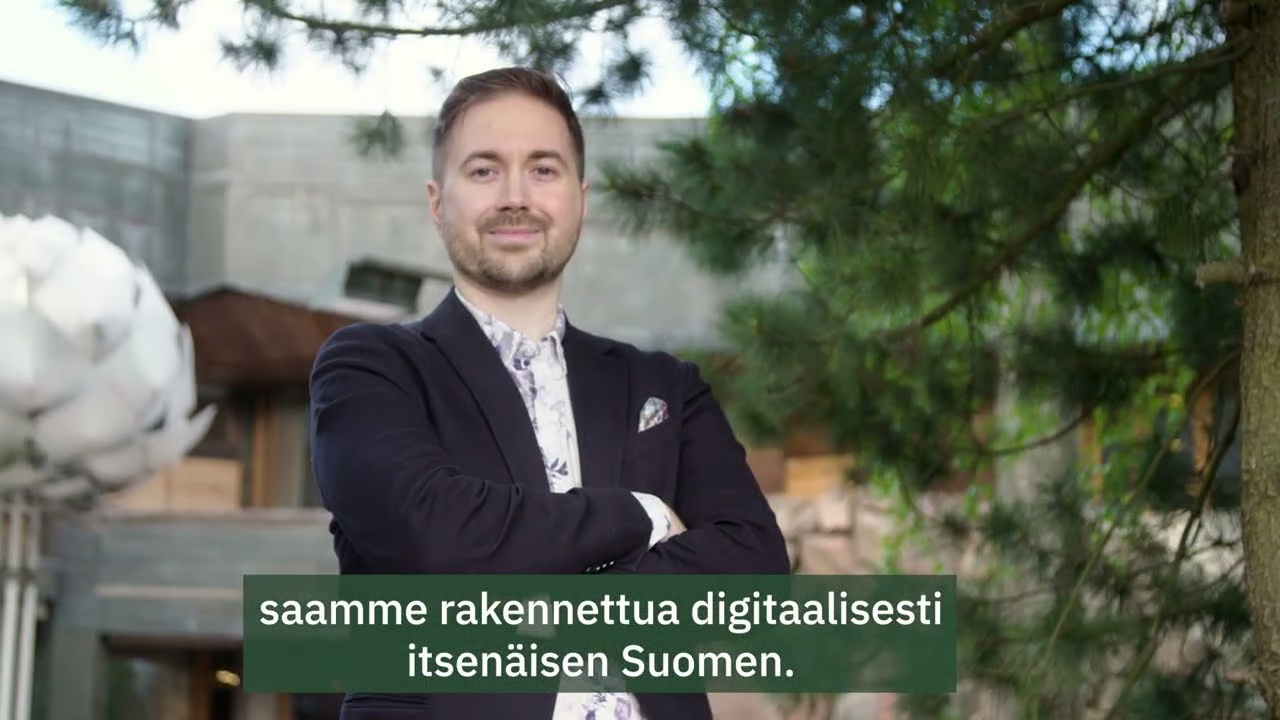
I am Lauri Lavanti — a Kirkkonummi municipal councillor, chair of the Green council group, father of four, lead developer, and Master of Science in Technology. On these pages you’ll find my thoughts on the future and what lies ahead for us. Practical details about the candidacy and voting are on the election page.
Making the economy work
Finland’s economy has to work in the age of AI. That means new companies, new jobs, and public services that genuinely use technology instead of just buying it from outside. Without technology expertise in parliament, decisions on AI procurement, data infrastructure, and working life get made by people who don’t know what they’re buying.
I write about the economy through what I have done for over a decade: building software and software teams across different industries. AI is changing the foundations of work, competitiveness, and public services. Finland can be a pioneer here, but only if public investment is directed at domestic expertise, with a real understanding of what is being done.
Making education seamless
Finland’s strength has always been its people and their expertise. In the age of AI, education has to stay seamless — from early childhood education to working life and all the way to retirement — so that everyone can develop their potential to the fullest. That way, AI’s productivity gains compound for the whole of society, and no one gets left behind.
Education is not a line item to cut first when the budget tightens. It is central infrastructure for the entire post-AI era. Savings on teaching, libraries, vocational training, and studies get paid back tenfold once labour markets change faster than people can learn new things.
Making freedom secure
Freedom is one of the most important questions of the age of AI. It’s a question of whether your data, your communications, and your everyday life remain your own, when most of the infrastructure they live on is owned by someone else. Privacy protection is a fundamental right — but the bigger question is whether fundamental rights hold up while we develop technology that makes mass surveillance almost free.
In my career, I’ve built software in environments where data rules are taken seriously — regulated industries like finance — as well as in environments where data is the business. That experience has made one thing clear: privacy and fundamental rights don’t protect themselves. They are protected by laws, regulations, and individuals who care passionately about it.

Digital independence
Finland and Europe need to control their own digital infrastructure. That’s why I launched the Digital Independence citizens’ initiative, which collected the 50,000 signatures required for parliamentary consideration in July 2026. In the initiative, we demand that Finland reduce its dependence on foreign digital service providers and strengthen digital sovereignty.
Finland’s public administration is heavily dependent on, for example, major American cloud providers, the so-called hyperscalers — Amazon, Microsoft, and Google. Since 2022, it has become uncomfortably clear that geopolitical power games are here to stay, including in the digital operating environment. Finnish and European alternatives exist: UpCloud is a concrete example of a high-performance domestic cloud service that the public sector can use. I advocate for breaking up public IT procurements, favouring open source, and factoring crisis preparedness — digital security of supply — into procurement decisions.
Who is Lauri Lavanti?
I have built secure software and banking services for over a decade and studied technology at Aalto University. When decisions are made about code, procurement, or data security, I know what is being discussed – and I want to make sure the solutions serve everyone’s everyday life. I also understand where the limits on technology must be set, so that the rule of law endures.

- Master of Science (Tech.), Aalto University
- Lead developer, over 10 years
- Municipal councillor in Kirkkonummi, chair of the Green council group
- Father of four
Frequently asked questions
Where is Lauri Lavanti running for parliament?
Lauri Lavanti is the Greens' parliamentary candidate in the Uusimaa electoral district in the 2027 parliamentary elections. He is a municipal councillor in Kirkkonummi and a lead developer, working towards a digitally independent Finland where the economy, education, and freedom work together in the age of AI.
What values does Lauri Lavanti's politics rest on?
The values most important to Lauri Lavanti are justice, equality, and democracy, together with openness and honesty. In his thinking, the economy is a means to fund schools, care, and other shared services, and everyone's privacy and fundamental rights must be safeguarded in the age of AI as well. The goal is a digitally independent Finland where no one is left behind.
What does AI mean for the Finnish economy?
AI is transforming the foundations of work, competitiveness, and public services — Finland needs to build its own expertise rather than becoming dependent on foreign platforms. Lauri Lavanti argues that economic policy must respond to this shift with concrete technological knowledge, not just general statements.
Why is privacy protection a political issue?
Privacy is a fundamental right that risks becoming stratified: those with the resources and knowledge protect themselves, while others cannot. Lauri Lavanti treats digital privacy as an equality issue that requires both legislation and genuine technical understanding.
What does digital independence mean in practice?
Digital independence means that public services, critical infrastructure, and citizens' data are not at the mercy of a handful of foreign corporations. Lauri Lavanti advocates for policies where Finland and the EU build their own technology base, rather than purchasing surveillance capacity from abroad.
How does technical expertise show up in political decision-making?
Lauri Lavanti brings hands-on experience in software development and digital systems to decision-making — he can tell when a technical argument holds and when it's just a sales pitch. His goal is for the public sector to keep pace with technological development and not procure solutions it doesn't understand.
Writing
-
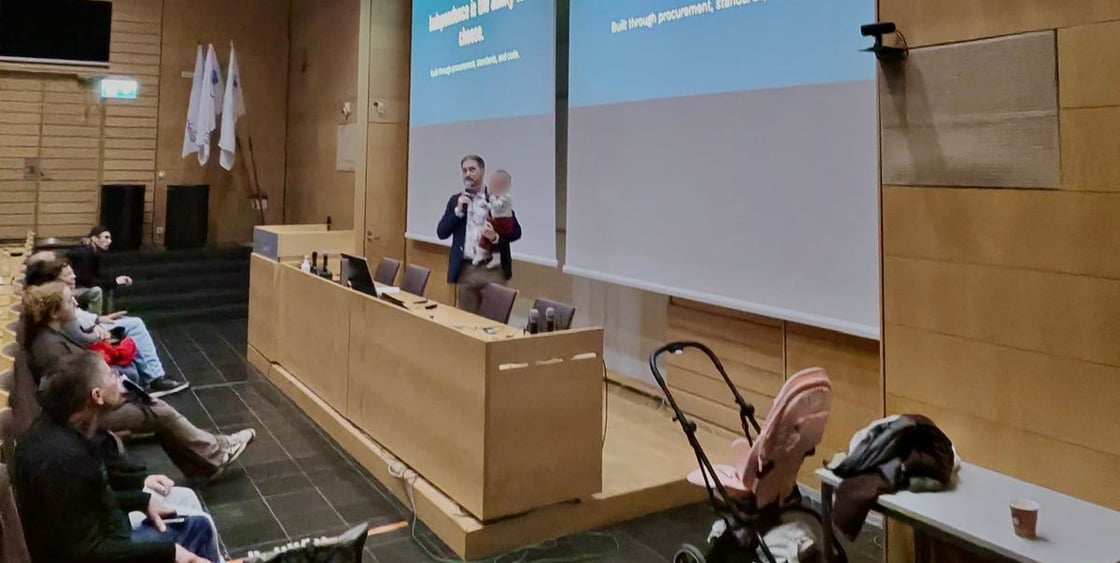
Digital independence: Finland's ability to choose
Digital independence is the ability to choose. My talk at Happy Hacking Day: where Finland and Europe stand now, and how procurement, standards and code help.
-
A Fuel Subsidy Worth Hundreds of Millions Would Deepen Import Dependency
A VAT cut on fuel and a lower distribution obligation would cost hundreds of millions and deepen import dependency. Give the money directly to people instead.
-
Who owns public sector data?
Portability in public procurement decides who owns public sector data. eVaka shows that an open, shared model survives a change of supplier.
-
YEL must not raise the entrepreneurship barrier
Finland's YEL reform would scrap the new-entrepreneur discount just as AI lowers the barrier to starting a business. Three fixes that keep the barrier low.
-
Kirkkonummi bypassed residents in planning forest logging
Kirkkonummi approved its forest management programme without consulting residents and without an advance assessment. The municipal strategy promises otherwise.
-
Data Centres Can Be Finland's Ace in International Politics
A leaked US cable exposed lobbying against data sovereignty. Data centres can be Finland’s ace in international politics, if we build them on our own terms.
-
Stability Brings Investment, Erratic Policy Drives It Away
Google's €13 billion investment came from a functioning electricity market. A price cap would remove the price signal exactly when it is needed most.
-
Raising HSL ticket prices is a mistake
HSL plans fare rises of about three percent a year in 2027–2029. A flat percentage hits Kirkkonummi hardest, where commuting requires an ABCD ticket.
-
Open Source Is the Cornerstone of Digital Independence
The EU tech sovereignty package names open source as the cornerstone of digital independence. Why a closed system is a risk and open source the fix.