The Green council group and Lauri Lavanti, 11 May 2026
The municipality of Kirkkonummi relies on digital infrastructure for nearly all of its operations — from remote meetings and archiving services to email and communication between schools and homes. If these services were unavailable, a large part of the municipality’s and its residents’ activities would grind to a halt or be significantly disrupted. Changes in the global security environment have shown that digital independence deserves far greater attention than it has received.
Why does digital resilience concern municipalities?
Several European countries — France, the Netherlands, and Germany — are actively working to reduce their digital dependencies on non-European providers. Starting the same work in Finland is essential, and the services closest to residents are the most critical place to begin.
A full break from non-European services is neither realistic nor even desirable. In the short and medium term, gains can be achieved by introducing European services alongside existing systems. In the long term, municipal demand for European providers helps develop the European offering into an ever stronger alternative.
A second important dimension is data. The vast majority of files in the municipality are stored and shared in closed file formats — which means the municipality is also dependent on the providers of those formats. The German federal government has responded to this by mandating open-standard file formats for all documents: either following the ODF standard or PDF/UA.
What does the initiative propose?
We, the undersigned councillors, propose that Kirkkonummi maps its dependencies on non-European IT systems and digital companies, and prepares appropriate contingency plans for situations in which those services are unavailable. In addition, Kirkkonummi should switch to using open-standard file formats — such as ODF and PDF/UA — for sharing documents.
The Green council group
I have written more about digital independence: why it is a necessity what it means in everyday procurement decisions, and which choices anyone can make in everyday life. Read more in my posts on digital independence.
Frequently asked questions
What does digital resilience mean for a municipality?
Digital resilience means that a municipality's critical services remain operational even during disruptions — such as cyber incidents or outages in foreign cloud services. The Kirkkonummi council initiative aims to map and reduce this risk.
Does digital sovereignty concern municipal decision-making?
Yes. Digital sovereignty is not only a national question — it is built through procurement decisions at the municipal level. When a municipality chooses a European provider, it strengthens both its own digital resilience and national sovereignty.
What does the initiative propose?
That Kirkkonummi maps its dependence on information systems and digital companies outside Europe, draws up contingency plans for service outages, and moves to open standards such as ODF and PDF/UA for sharing files.
Why does digital resilience concern municipalities?
The municipality relies on digital systems in nearly everything it does, from remote meetings to school-home communication, and the services closest to residents are central to preparedness. France, the Netherlands and Germany are already limiting their dependence on actors outside Europe.
Why does digital resilience matter?
If the digital services were unavailable, much of what the municipality and its residents do would grind to a halt. Full decoupling is not realistic, but European services alongside the current systems and open file formats reduce the risk and strengthen the European supply.
Other posts
-
Digital independence is built one step at a time
Digital independence and resilience are built in every procurement decision. Helsinki chose Finnish UpCloud as the platform for its core public services system.
-
Digital independence is a necessity
Finland's digital services depend on US platforms. As the US becomes unreliable, digital sovereignty is no longer optional — it is a necessity.
-
Digital independence: Finland's ability to choose
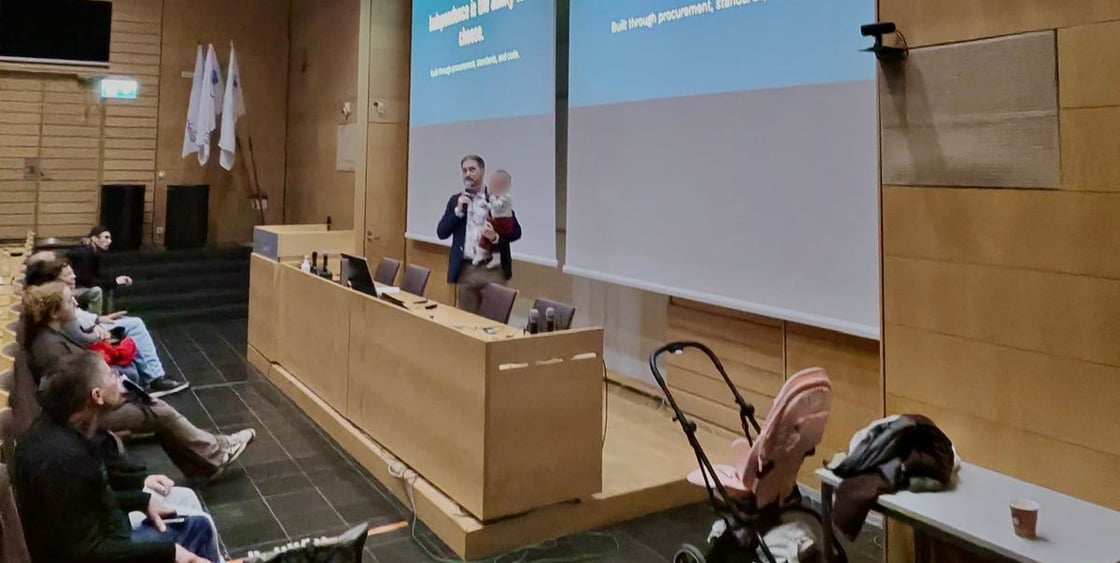
Digital independence is the ability to choose. My talk at Happy Hacking Day: where Finland and Europe stand now, and how procurement, standards and code help.