What does it mean to live in the age of AI?
I have over a decade of hands-on experience building secure software and banking systems. From that background I write about why AI does not merely speed up work but forces us to rethink nearly every part of society: the social safety net, why digital independence is a precondition for a free society, and how we ensure that everyone benefits from technology — not only a few.
AI
I use and build AI tools in my work every day. AI is the most significant technological shift of our time, and Finland must engage with it actively — so we get the benefits, not just the harms.
AI amplifies both capability and harm. In public-sector applications — benefits decisions, permit processing, predictive policing — the stakes are too high to deploy systems without transparency and oversight. I advocate for auditable algorithms in consequential decisions, open AI models where feasible, and mandatory human review for decisions that affect individual rights.
The more powerful AI becomes, the more important privacy protections are. AI systems are data-hungry; without strong data protection rules, they become surveillance infrastructure. The EU AI Act is a step in the right direction, but implementation must be genuine — not just a formality.
-
Digital independence: Finland's ability to choose
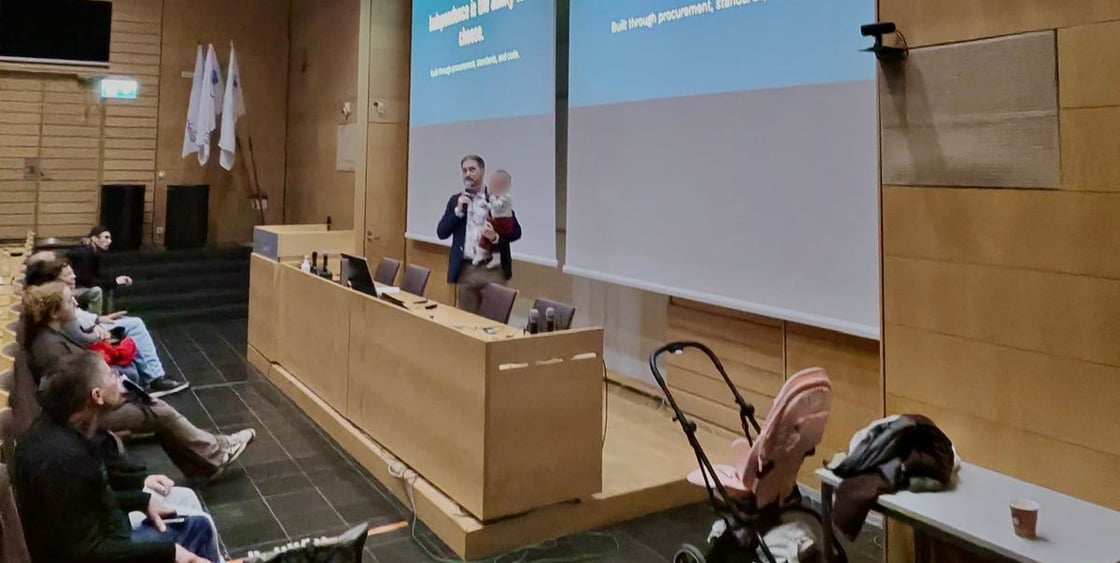
Digital independence is the ability to choose. My talk at Happy Hacking Day: where Finland and Europe stand now, and how procurement, standards and code help.
-
YEL must not raise the entrepreneurship barrier
Finland's YEL reform would scrap the new-entrepreneur discount just as AI lowers the barrier to starting a business. Three fixes that keep the barrier low.
-
Running for parliament in 2027: Finland needs digital independence in the age of AI
I am running as a Green candidate in Uusimaa for the 2027 parliamentary election. My goal is a digitally independent Finland in the age of AI.

Economy
Finland’s economy needs to keep working through the AI transition. That means new companies, new jobs, and public services that actually use the technology rather than just buy it in from outside. Without serious technology competence in parliament, decisions about AI procurement, data infrastructure, and labour policy are made by people who don’t know what they are buying.
I write about the economy through the lens of what I have done for over a decade: built software and software teams across different industries. AI changes the basis of work, competitiveness and public services. Finland can lead this shift, but only if public investment is targeted at domestic capability in a way that actually understands what is being done.
A working economy in the AI era is not just a slogan. It is substance: skills that survive the transition, businesses that can build on Finnish and European infrastructure, and a state that procures technology on its own terms.
-
A Fuel Subsidy Worth Hundreds of Millions Would Deepen Import Dependency
A VAT cut on fuel and a lower distribution obligation would cost hundreds of millions and deepen import dependency. Give the money directly to people instead.
-
Who owns public sector data?
Portability in public procurement decides who owns public sector data. eVaka shows that an open, shared model survives a change of supplier.
-
Data Centres Can Be Finland's Ace in International Politics
A leaked US cable exposed lobbying against data sovereignty. Data centres can be Finland’s ace in international politics, if we build them on our own terms.


Enlightenment
Finland's strength has always been its people and their skills. In the AI era, enlightenment has to stay seamless — from early childhood education through working life and all the way to retirement — so that everyone can develop their potential to the full. That way, AI's productivity gains compound for the whole of society, and no one gets left behind.
Education is not a cost item to be trimmed when the budget tightens. It is central infrastructure for the whole post-AI era. Cuts to teaching, to libraries, to vocational training and to continuing education are paid back tenfold when the labour market shifts faster than people can learn new things.
Seamless enlightenment means learning never stops — it stays possible whatever stage of life you are in. AI makes that path vastly more important. The country that keeps the path open for everyone gets the full potential of its people. That is a stronger foundation than any other competitive advantage.
-
AI helps secure municipal services, but it is not free
In Konnevesi, AI cut processing time for road grants from two months to days. Kirkkonummi is too small to act alone — but collaboration makes change possible.
-
AI changes what developers get paid for
AI does in two minutes what used to take a developer two weeks. The price of code is collapsing — but what will developers get paid for instead?
-
2026 is the year of AI
AI is changing society — but perhaps not as you imagine. The biggest changes will be in private life and in the everyday lives of children.


Freedom
Freedom is one of the most important questions of the AI era. It is whether your data, your communications and your ordinary life remain yours when most of the infrastructure around them is owned by someone else. Privacy is the basic case — but the broader question is whether civil liberties survive technology that makes mass surveillance almost free.
I have spent my career building software in environments where the rules around data were taken seriously — regulated fields like finance — as well as environments where data is the business itself. That experience makes one thing obvious: privacy and civil liberties don't protect themselves. They are protected by laws, by regulations, and by individuals who care about it passionately.
Securing freedom in the AI era requires carefully weighed trade-offs and strict limits. Mass surveillance, expanding the use of biometric identifiers, or automatic scanning of messages are not tools to be adopted lightly, if at all. Every step that erodes privacy needs airtight justification and clear evidence of benefit — without that, it has no case.
-
Kirkkonummi bypassed residents in planning forest logging
Kirkkonummi approved its forest management programme without consulting residents and without an advance assessment. The municipal strategy promises otherwise.
-
David's Sling Is Proof That Europe Has Failed
David's Sling was the right procurement for Finland, but it reveals the failure of Europe's defence industry. A market-green view on defence procurement.
-
Digital independence: 5 + 1 choices for everyday life
Digital independence is built through everyday choices. Here are 5 + 1 concrete ways to strengthen it and digital security of supply yourself.



Digital independence
Finland and Europe must control their own digital infrastructure. That is why I founded the digital independence citizens' initiative, which collected the 50,000 signatures required for parliamentary review in July 2026. With it, we demand that Finland reduce its dependency on foreign digital service providers and strengthen digital sovereignty.
Finnish public administration is heavily dependent on large US cloud providers, so-called hyperscalers — for example Amazon, Microsoft, and Google. Since 2022 it has become painfully clear that power politics in geopolitics is here to stay, including in the digital arena. Finnish and European alternatives exist: UpCloud is a concrete example of a high-performance domestic cloud provider that the public sector can use. I advocate for breaking up public IT procurement, preferring open source, and factoring in crisis resilience in procurement decisions.
Digital independence is also about data portability and avoiding lock-in to individual vendors. Public data generated with public money should be portable and stored in a way that outside parties cannot misuse it.
-
Open Source Is the Cornerstone of Digital Independence
The EU tech sovereignty package names open source as the cornerstone of digital independence. Why a closed system is a risk and open source the fix.
-
Airbus Chose Scaleway Partly Because of Jurisdiction
Airbus moved critical systems to Scaleway partly over jurisdiction. The same risk assessment applies to any cloud choice.
-
Finland Can Turn Electrification Into a Competitive Edge
Caruna is changing owners, but regulation — not ownership — decides the power grid's future. Finland can turn electrification into a competitive edge.

Kirkkonummi
I am a Kirkkonummi municipal councillor. That means I have a say in the municipal budget, zoning, service contracts, and infrastructure — decisions that directly shape what it is like to live here. Most of those decisions are made without much public attention, and that is exactly when it matters who is making the decisions.
The issues I push hardest on locally are the same ones I write about nationally: digital services that actually work for residents, urban planning that builds on Kirkkonummi's geography instead of fighting it, and public transport that enables the municipality's sustainable growth.
Kirkkonummi is a bilingual, coastal municipality growing fast at the edge of the Helsinki region. It has plenty of real assets — shoreline, nature, a mixed community — and real pressures: a revenue base that struggles to keep up with demand, and a rail line that is critical to the region. Local politics here is not small politics.
-
Raising HSL ticket prices is a mistake
HSL plans fare rises of about three percent a year in 2027–2029. A flat percentage hits Kirkkonummi hardest, where commuting requires an ABCD ticket.
-
The flag is up. What does Kirkkonummi do next?
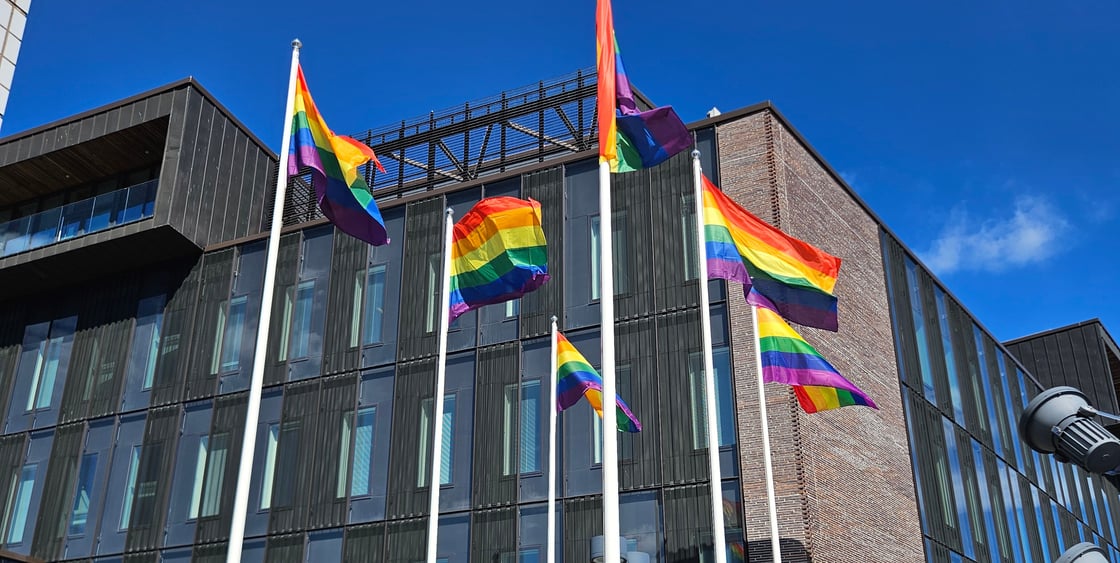
Kirkkonummi raised the Pride flag for the first time on 22 June 2026. The flag matters, but equality also demands concrete action in the autumn budget.
-
Council initiative: digital resilience
Kirkkonummi relies on digital systems for nearly all its operations. This initiative calls for mapping dependencies and switching to open file formats.