Consider this for a moment: in the upcoming parliamentary election, your voter data and the election results will, for the first time in history, be stored outside the country’s borders – in a data centre owned by the American company Amazon. At the same time, the Finnish Tax Administration is moving Finns’ tax data to Microsoft’s cloud, and Kela, the Social Insurance Institution, plans to move the processing of benefits to American servers.
This is not merely a technical detail. It is about who decides where Finns’ data ends up – and who has access to it. The standard answer from public sector decision-makers has been that the data stays in Europe. Technically that is true, but legally it is misleading.
Why is keeping data in Europe not enough?
The US CLOUD Act obliges American technology companies to hand over data in their possession to US authorities – regardless of where the servers physically sit. In the same way, Chinese law obliges Chinese companies to cooperate with the country’s intelligence services. In Russia the situation is even simpler: state control over technology is direct and open.
So the question is not only where the servers are located. It is whose laws and oversight apply. If a cloud service becomes unavailable, or trust in the accuracy of the data it holds or produces breaks down, the digital foundation of our society weakens – and we have no say in what happens.
What does dependence on foreign tech companies cost Finland?
There is also a financial side to this that is rarely mentioned. The public sector pays more than a billion euros a year in licence fees to American technology companies. This is not just poor value for money – it is a lack of digital resilience. Meanwhile the money flows out of Finland into the pockets of other countries’ tech giants, instead of supporting Finnish jobs and expertise.
What would Finland gain from digital independence?
Fortunately, the situation also holds a major opportunity. Finland has world-class software expertise with roots going back to the development of the Linux operating system. If even part of this money were directed to domestic technology development, it would create new high-tech jobs, competitive digital solutions and entirely new export opportunities. France, Germany and Denmark have already woken up to this – and it would be foolish of us to fall behind.
The digital sovereignty movement under way in Europe gives Finnish software companies a unique opportunity to get on board. This does not mean isolation. It means that Finland itself decides on its own digital infrastructure – just as it decides on its own defence. That way services stay up in good times and bad, and we have the power to decide where our data goes and who controls it.
This is possible. All it takes is a decision – and the courage to make it now, before it is too late.
Sign the citizens’ initiative on digital independence and demand that digital services critical to Finland are built under Finnish control from now on: digitaalinenitsenaisyys.fi
Frequently asked questions
Why is keeping data in Europe not enough?
Because what decides the matter is whose laws and oversight apply. The US CLOUD Act obliges American technology companies to hand over data in their possession to US authorities, regardless of where the servers physically sit.
What does dependence on foreign tech companies cost Finland?
The Finnish public sector pays more than a billion euros a year in licence fees to American technology companies. That money leaves Finland instead of supporting Finnish jobs and expertise, and the dependence buys no digital resilience.
What would Finland gain from digital independence?
New high-tech jobs, competitive digital solutions and new export opportunities, if even part of the licence fees were directed to domestic technology development. Finland would also decide on its own digital infrastructure, just as it decides on its own defence.
Why is a foreign cloud a security of supply risk?
Because if a foreign cloud service becomes unavailable, or trust in the accuracy of the data it holds or produces breaks down, the digital foundation of our society weakens, and we have no say in what happens. Dependence on foreign tech companies is not just poor value for money; it is a lack of digital resilience.
What does digital independence mean?
It means that Finland itself decides on its own digital infrastructure, just as it decides on its own defence. That way services stay up in good times and bad, and we have the power to decide where our data goes and who controls it.
Does digital independence mean isolation?
No. It means that Finland itself decides on its own digital infrastructure, while seizing the opportunity that the European digital sovereignty movement offers.
Other posts
-
Digital independence is a necessity
Finland's digital services depend on US platforms. As the US becomes unreliable, digital sovereignty is no longer optional — it is a necessity.
-
Digital independence is built one step at a time
Digital independence and resilience are built in every procurement decision. Helsinki chose Finnish UpCloud as the platform for its core public services system.
-
Digital independence: Finland's ability to choose
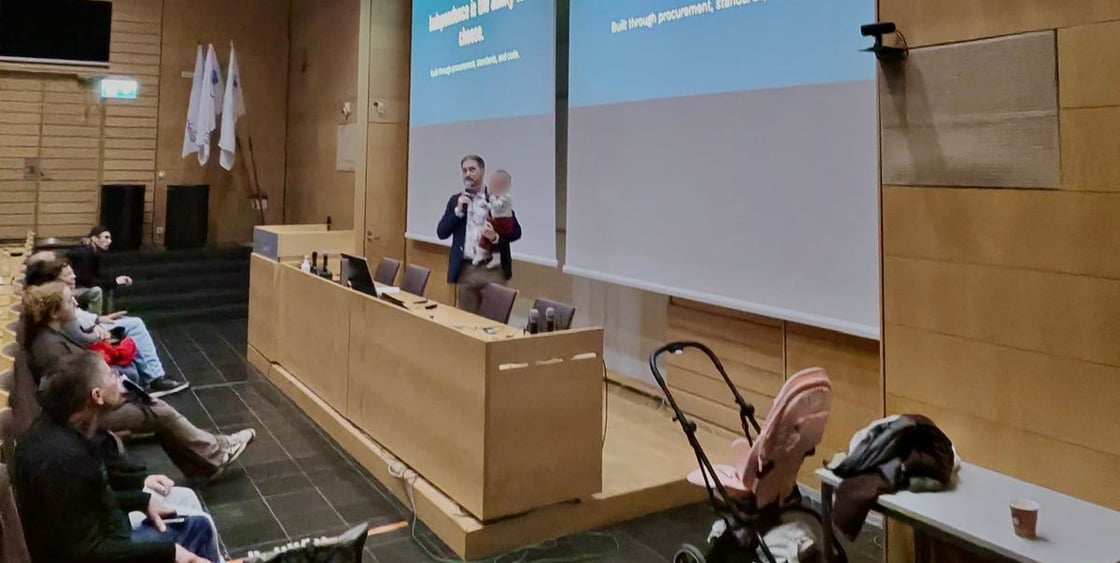
Digital independence is the ability to choose. My talk at Happy Hacking Day: where Finland and Europe stand now, and how procurement, standards and code help.