Digital independence means that Finland controls its own critical digital systems, so that no outside power can easily cut off or restrict their use. It is built through public procurement, open standards and European cooperation.
I am the initiator and driving force of the Digital Independence citizens’ initiative. Finland has prepared for crises for centuries. Digital independence extends the same preparedness to the systems our daily lives depend on.
What does digital independence mean in practice?
In practice, digital independence means that critical systems such as elections, social security and taxation stay under Finnish and EU law. The authority knows who owns the system, which country’s law applies to it and how the service can be moved to another supplier. What matters is who can access it and who can shut it down.
At its core, this is about who decides on shared infrastructure. Elections and social security belong to everyone, so their terms must be decided democratically here, not within another state’s administration.
The Finnish Government (valtioneuvosto) speaks of the same matter as digital sovereignty in its roadmap. I have written earlier about why digital independence is a necessity for Finland.
How does digital independence differ from isolation?
Digital independence differs from isolation in that Finland keeps using the world’s best tools, but critical systems always have an alternative and a plan for changing supplier. Not everything is built in-house. Open standards and open source keep the choice open, and European cooperation provides a scale that a small country cannot reach alone.
In Sweden, two agencies, the Social Insurance Agency (Försäkringskassan) and the Transport Administration (Trafikverket), have already connected their communication systems with the open Matrix standard, even though they use different suppliers (blog of the software company Element, 26 May 2026).
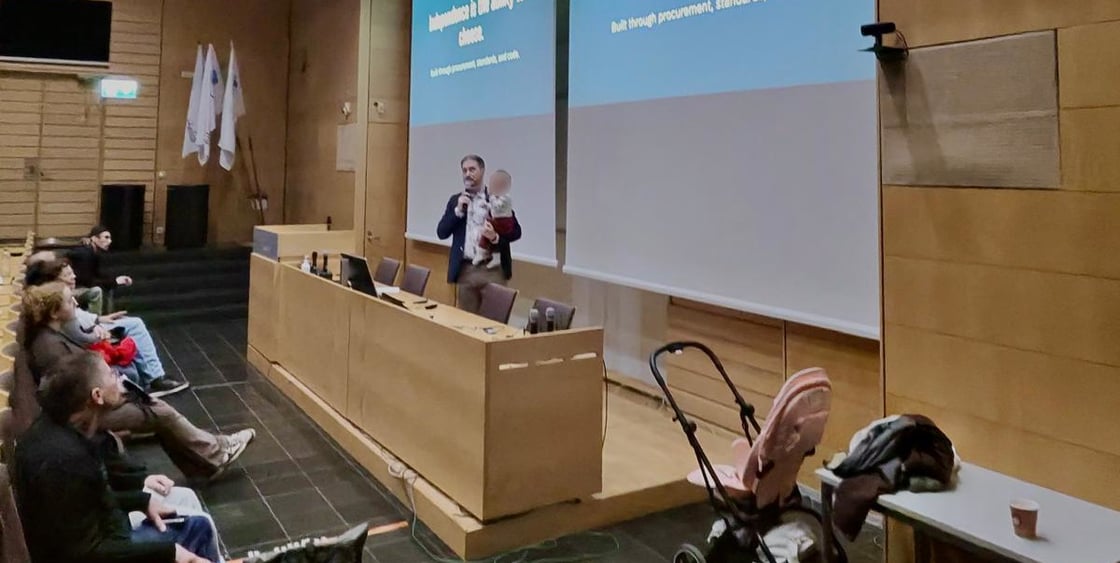
Joint demand across the Nordic countries and Europe gives European alternatives the scale they need. At Happy Hacking Day I spoke in more detail about the ways in which Finland and Europe can build freedom of choice.
Why is digital independence security of supply?
Digital independence is security of supply because it is the same preparedness Finland already applies to grain, medicines and fuel. If access to a critical information system is cut, payments from Kela (the Social Insurance Institution of Finland), taxation and elections must still work. Preparing before a crisis pays off, because mid-crisis there is no time to build alternatives.
At present, Finland’s security of supply (huoltovarmuus) does not extend to the cloud. The City of Helsinki has already shown that digital independence is built one step at a time, through individual procurement decisions. Business benefits too. When critical systems are procured so that no outside power can restrict them, Finnish and European companies gain markets without business subsidies.
Security of supply has always been Finnish common sense. Now it must extend to information systems too.
What does the Digital Independence citizens’ initiative demand?
The Digital Independence citizens’ initiative proposes a law under which critical digital services in Finnish public administration are delivered with solutions from Finnish and European providers. The requirement covers, for example, systems behind elections, social security and taxation. Services must work in a crisis, and Finland must not depend on one supplier.
The need is real. The Ministry of Justice planned to move the election information system to a US cloud service, and according to Helsingin Sanomat (Finland’s largest daily newspaper) the plan was on hold in July 2026.
According to the initiative, in critical public digital services:
- data and services are held by Finnish and European actors
- servers are located within the European Union or the European Economic Area (EEA)
- software is European or open source
- the authority knows who owns the system and which country’s legislation applies to it
The proposed law would also cover continuity plans and testing, and ensure that a system does not depend on a single supplier. The full text of the initiative is available on the Ministry of Justice’s Kansalaisaloite.fi service.
What happens next to the Digital Independence citizens’ initiative?
The Digital Independence citizens’ initiative will be submitted to Parliament (eduskunta) after the spring 2027 parliamentary elections. Collection of statements of support began on 4 February 2026 and ended on 4 August 2026. According to the Kansalaisaloite.fi service, the initiative gathered 50,819 statements of support, and the 50,000 threshold needed for parliamentary consideration was passed on 22 July 2026.
More than 50,000 people supported the initiative, although the topic is fairly technical. The aim of the initiative is that the next Parliament enacts a law that reduces digital dependence on states outside Europe.
The Digital and Population Data Services Agency (DVV) verifies the statements of support before the initiative is submitted to Parliament. The statements must be delivered to DVV for verification within a year of the end of collection, and the initiative must be submitted to Parliament within a year of DVV’s decision (Citizens’ Initiative Act, in Finnish). Submission after the elections fits within these deadlines.
Does a citizens’ initiative lapse at the end of the electoral term?
The Digital Independence citizens’ initiative will be taken to the new Parliament after the spring 2027 elections so it can be properly handled. An initiative still pending in Parliament lapses when the electoral term ends. Submitting it only after the elections gives the new Parliament a full term to consider it. The initiative therefore does not lapse at the change of term.
We prepared in advance for both options. Had the 50,000 threshold been passed early in the collection, we would have considered submitting the initiative to the current Parliament.
Critical systems must work on a bad day too.
When you apply for support from Kela, pay taxes or vote, you trust that the system works and that its rules are decided here. I am standing for Parliament in the Uusimaa electoral district, and my principle is that procurement conditions for critical systems should be written into law.
Frequently asked questions
What does digital independence mean in practice?
In practice, digital independence means that critical systems such as elections, social security and taxation stay under Finnish and EU law. The authority knows who owns the system, which country's law applies to it and how the service can be moved to another supplier. What matters is who can access it and who can shut it down.
How does digital independence differ from isolation?
Digital independence differs from isolation in that Finland keeps using the world's best tools, but critical systems always have an alternative and a plan for changing supplier. Not everything is built in-house. Open standards and open source keep the choice open, and European cooperation provides a scale that a small country cannot reach alone.
Why is digital independence security of supply?
Digital independence is security of supply because it is the same preparedness Finland already applies to grain, medicines and fuel. If access to a critical information system is cut, payments from Kela (the Social Insurance Institution of Finland), taxation and elections must still work. Preparing before a crisis pays off, because mid-crisis there is no time to build alternatives.
What does the Digital Independence citizens' initiative demand?
The Digital Independence citizens' initiative proposes a law under which critical digital services in Finnish public administration are delivered with solutions from Finnish and European providers. The requirement covers, for example, systems behind elections, social security and taxation. Services must work in a crisis, and Finland must not depend on one supplier.
What happens next to the Digital Independence citizens' initiative?
The Digital Independence citizens' initiative will be submitted to Parliament after the spring 2027 parliamentary elections. Collection of statements of support began on 4 February 2026 and ended on 4 August 2026. According to the Kansalaisaloite.fi service, the initiative gathered 50,819 statements of support, and the 50,000 threshold needed for parliamentary consideration was passed on 22 July 2026.
Does a citizens' initiative lapse at the end of the electoral term?
The Digital Independence citizens' initiative will be taken to the new Parliament after the spring 2027 elections so it can be properly handled. An initiative still pending in Parliament lapses when the electoral term ends. Submitting it only after the elections gives the new Parliament a full term to consider it. The initiative therefore does not lapse at the change of term.
Other posts
-
Digital independence is a necessity
Finland's digital services depend on US platforms. As the US becomes unreliable, digital sovereignty is no longer optional — it is a necessity.
-
Digital independence: Finland's ability to choose
Digital independence is the ability to choose. My talk at Happy Hacking Day: where Finland and Europe stand now, and how procurement, standards and code help.
-
Finland and Finns Risk Losing Control of Their Own Data – and It Will Cost Dearly
Voter data in Amazon's cloud, tax data with Microsoft. The CLOUD Act reaches data wherever it is stored, so Finland must decide on its own digital foundation.