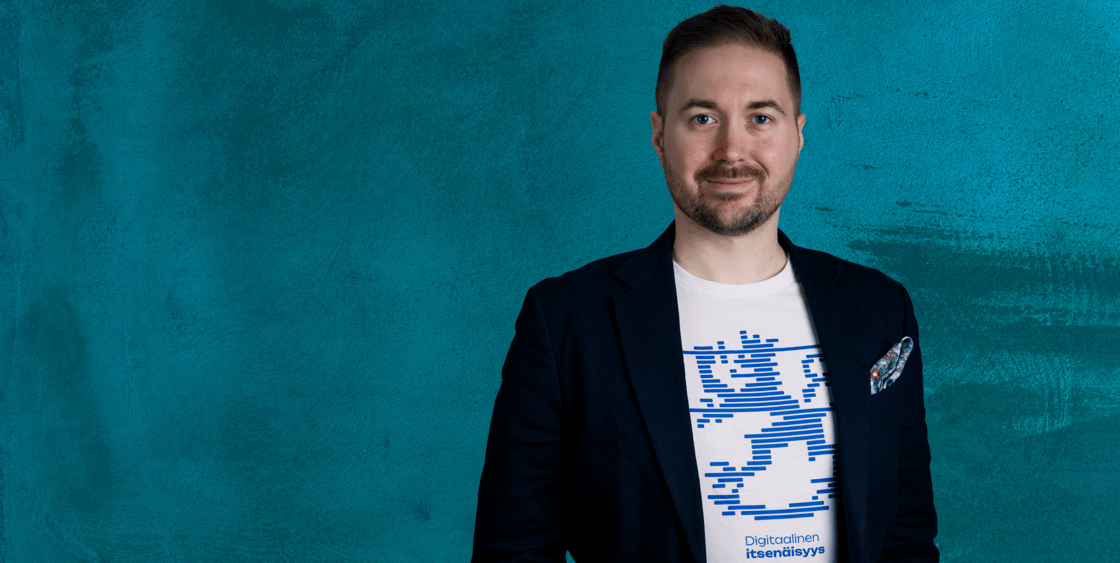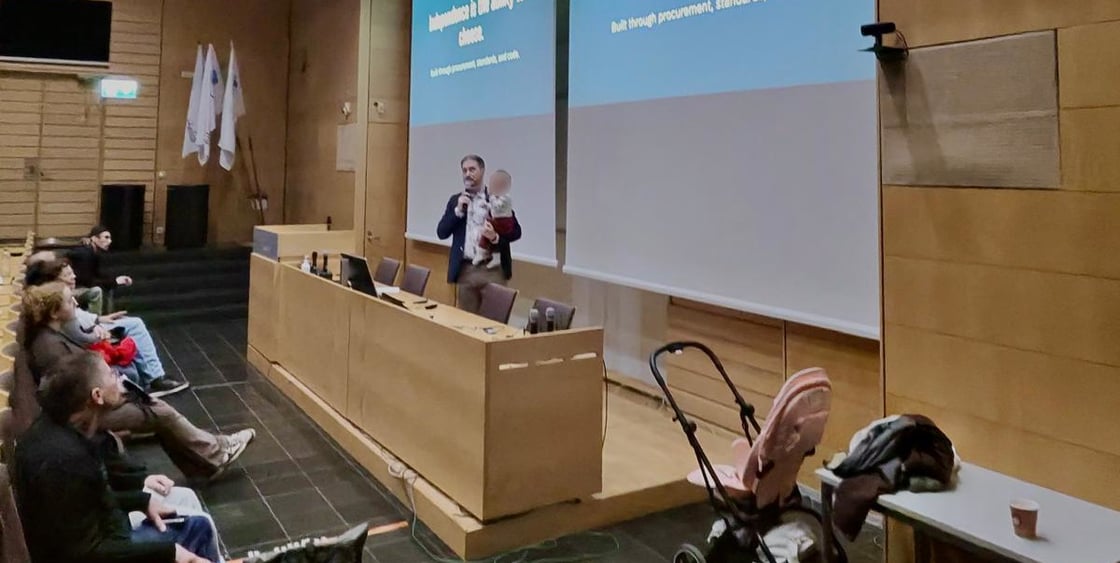
I’m Lauri Lavanti, a Kirkkonummi municipal councillor and the Greens’ parliamentary candidate in the Uusimaa electoral district for the 2027 election. I want Finland to secure its digital independence in the age of AI. I’m one of the founders of the Digital Independence citizens’ initiative, which gathered the required 50,000 signatures in July 2026. The initiative will be submitted to parliament after the spring 2027 election, so that the new parliament has time to consider it in full. I want to build a Finland that uses AI and technology on its own terms, where no one gets left behind.
To me, politics means taking care of shared matters, sustainably and across party lines. Openness, honesty, and listening to different views matter, especially on hard questions.
What expertise do I bring to parliament?
I hold an MSc from Aalto University and work as a lead developer, with more than 10 years of experience building secure software and banking services. I want to bring that practical expertise into parliament, so decisions actually serve everyday life for Finns.
Finland has spent decades building world-class technology, in companies, universities, and through their collaboration: from Vaisala to icebreakers, from Nokia to Linux and Supercell, to ICEYE and IQM. AI opens a new chapter in that story, but it requires parliament to understand what the technology actually demands in practice.
My campaign rests on three pillars: the economy, education, and freedom.
Why does vendor dependency cost taxpayers?
I’m demanding that public AI and digital procurement be built open and portable, so vendor dependency doesn’t drain tax money year after year. My example is eVaka, the open-source early childhood education system developed jointly by Espoo, Tampere, Oulu, and Turku. More than ten municipalities already benefit from it, and because the costs are shared, it saves money every year. The same principle has to apply to AI procurement: openness and portability need to be procurement conditions from day one.
How does education stay equal in the age of AI?
Skills need to stay current throughout life and be equally available to everyone, from vocational training to higher education. I’m deeply concerned about the funding cuts to both vocational and university education — diverse expertise is the foundation of Finland’s competitiveness.
I want to highlight the role of libraries in particular: they’re one of the few places that offer free access to knowledge and skills without harvesting user data. In the age of AI, that makes them essential guardians of equality.
How does AI threaten fundamental rights?
AI makes mass surveillance technically easier, which is exactly why legislation has to hold the line on fundamental rights. I’ve written before about why the European Parliament was right to reject the chat control proposal: the same principle applies to any automatic scanning of private messages.
Without strong privacy protection, democracy cannot function, and AI must never be used to weaken it. Fundamental rights have to be the starting point for all legislation, not a variable.
What does digital independence mean?
The economy, education, and freedom come together in my campaign as one central goal: digital independence. That doesn’t mean isolation — it means building genuine domestic and European alternatives for when we need them. I’ve written before about why digital independence is a necessity and how it’s built one step at a time.
My case is backed by solid research: according to a survey published by Sitra and the Finnish Business and Policy Forum (EVA) in May 2026, 77 percent of Finns believe Europe needs to reduce its technological and economic dependence on the United States, even while still viewing it as an important security partner. That widespread concern now calls for concrete action.
My vision is clear: in the age of AI, Finland can see new companies and new jobs emerge, while everyone’s freedom stays guaranteed even as technology develops fast, and no one gets left behind.
Corrected 26 September 2026: the citizens’ initiative will be submitted to parliament only after the election.
Frequently asked questions
Why am I running for parliament in 2027?
Because Finland needs to secure its digital independence in the age of AI. I bring more than 10 years of experience building secure software and banking services to parliament, and I'm one of the founders of the Digital Independence citizens' initiative.
What are the three pillars of my campaign?
The economy, education, and freedom. I'm demanding open and portable AI and digital procurement, equal access to skills throughout life, and strong privacy protection and fundamental rights in the age of AI.
What expertise do I bring to parliament?
I hold an MSc from Aalto University and work as a lead developer with more than 10 years of experience building secure software and banking services. AI opens a new chapter in Finland's technology story, but it requires parliament to understand what the technology demands in practice.
How does AI threaten fundamental rights?
AI makes mass surveillance technically easier, so legislation has to hold the line on fundamental rights: the same principle that made rejecting the EU's chat control proposal the right call applies to any automatic scanning of private messages. Without strong privacy protection, democracy cannot function.
Why does vendor dependency cost taxpayers?
When public AI and digital procurement is not built open and portable, the dependency drains tax money year after year. The open-source eVaka of Espoo, Tampere, Oulu and Turku shows the alternative: more than ten municipalities share the development costs and save every year.
Other posts
-
Digital independence is not isolation
Digital independence means Finland controls its own critical systems. What does the citizens' initiative demand, and when does it reach Parliament?
-
Digital independence is a necessity
Finland's digital services depend on US platforms. As the US becomes unreliable, digital sovereignty is no longer optional — it is a necessity.
-
Digital independence: Finland's ability to choose
Digital independence is the ability to choose. My talk at Happy Hacking Day: where Finland and Europe stand now, and how procurement, standards and code help.