Microsoft’s data centre is being built on three campuses in Espoo, Kirkkonummi and Vihti, and the first phase is expected to be completed in 2026–2027. As a result, the area gets a large building site and a facility whose waste heat can warm homes in the region.
The investment is a good thing if the rules are good and they are followed. Data centres should be treated like any other industry: a project is welcome as long as nature and the environment do not end up paying for it. For the future, the rules have to be written now, because the queue holds many times more projects than will eventually be built.
What does the Microsoft data centre mean for Kirkkonummi?
The Microsoft data centre brings Kirkkonummi a building site first and then a facility where, once the first phase is complete, about 50 people will work in each building. Permanent jobs will therefore be fewer than the size of the site might suggest. The biggest lasting benefit may be waste heat, which is fed into the regional district heating network.
The second phase has building permits on all three campuses, and in April Microsoft announced that it was starting construction. Once the whole area is complete, waste heat could cover about 40% of the heat demand of the energy company Fortum’s district heating network. The network has about 250,000 customers, so the figure applies to the whole region and not just Kirkkonummi.
What do the Greens’ conditions for data centres contain?
On 26 September 2026, at the party council in Oulu, the Greens (Vihreä liitto) decided that data centres can be built in Finland when environmental harm is kept within strict limits and the project leaves real benefit in Finland. On nature, the polluter pays. The builder first looks for a site on already built land, keeps the harm small and compensates for the rest.
Of the conditions, I especially like the one on nature. The hierarchy starts with avoiding any loss of nature. If that is not possible and the project brings real benefit, the builder keeps the harm as small as it can and compensates for everything that remains. The compensation has to be real and not just on paper: equivalent nature is restored elsewhere and someone checks the result. For forest loss, the Greens also propose a land-use change fee.
If connections to the transmission grid are prioritised, the Greens require the project to commit to new emission-free generation and to flexibility, because the transmission grid is a bigger question than generation. The project’s energy consumption and environmental impacts should be published already at the permit stage, so that a local councillor can ask about them before the decision, and the project must present a plan for using its waste heat. A project that uses water must use a closed water circuit, and any project that is not small undergoes an environmental impact assessment (EIA).
Why should the same rules apply to all industry?
A forest suffers just as much whether a data centre, a factory or a hydrogen plant is built on it. I therefore propose that the same conditions apply to all large users of electricity and land, whatever their sector. In the Greens’ text, compensation already covers all land use, but the waste heat plan, the flexibility obligation and the publication of information are written only for data centres.
If connections to the transmission grid are prioritised, all applicants should be assessed against the same criteria, because a steel mill queues for the same grid as a data centre.
On electricity tax, data centres moved on 1 July 2026 to the general tax class, where the tax is 2.24 cents per kilowatt-hour instead of the previous 0.05 cents, but manufacturing industry still pays a lower tax. Taxation should not favour any sector. The lower tax class for manufacturing industry should therefore also be reviewed.
How does the Microsoft data centre affect the price of electricity?
Fingrid, the transmission system operator, has received connection enquiries from data centres totalling over 50,000 megawatts, and an estimated 10% of them will be built. The effect of the Microsoft data centre and other projects on the price of electricity therefore depends on who gets a connection and on what terms, and on whether new emission-free generation keeps pace with consumption.
I wrote about grid regulation in Finland Can Turn Electrification Into a Competitive Edge and about why predictability attracts investment in Stability Brings Investment, Erratic Policy Drives It Away.
How much computing capacity does Finland need by 2030?
Finland should aim for 3–4 gigawatts of AI computing capacity by 2030, and I propose it as a national target. The capacity would be built under the same rules as other large energy use: primarily on already built land and with clean electricity, so that waste heat is used and the information is public from the permit stage.
Fossil-free electricity and a cool climate give Finland good conditions for reaching the target. New computing centres would be placed first on old industrial areas and other already built sites, and the target is achievable only if the transmission grid and new emission-free generation grow at the same pace. The Greens want to give priority to projects that support the digital sovereignty of Finland and Europe. I wrote about Finland’s position as a host country in Data Centres Can Be Finland’s Ace in International Politics.
In Parliament, I would push for rules that are the same for all large users of electricity and that are also followed.
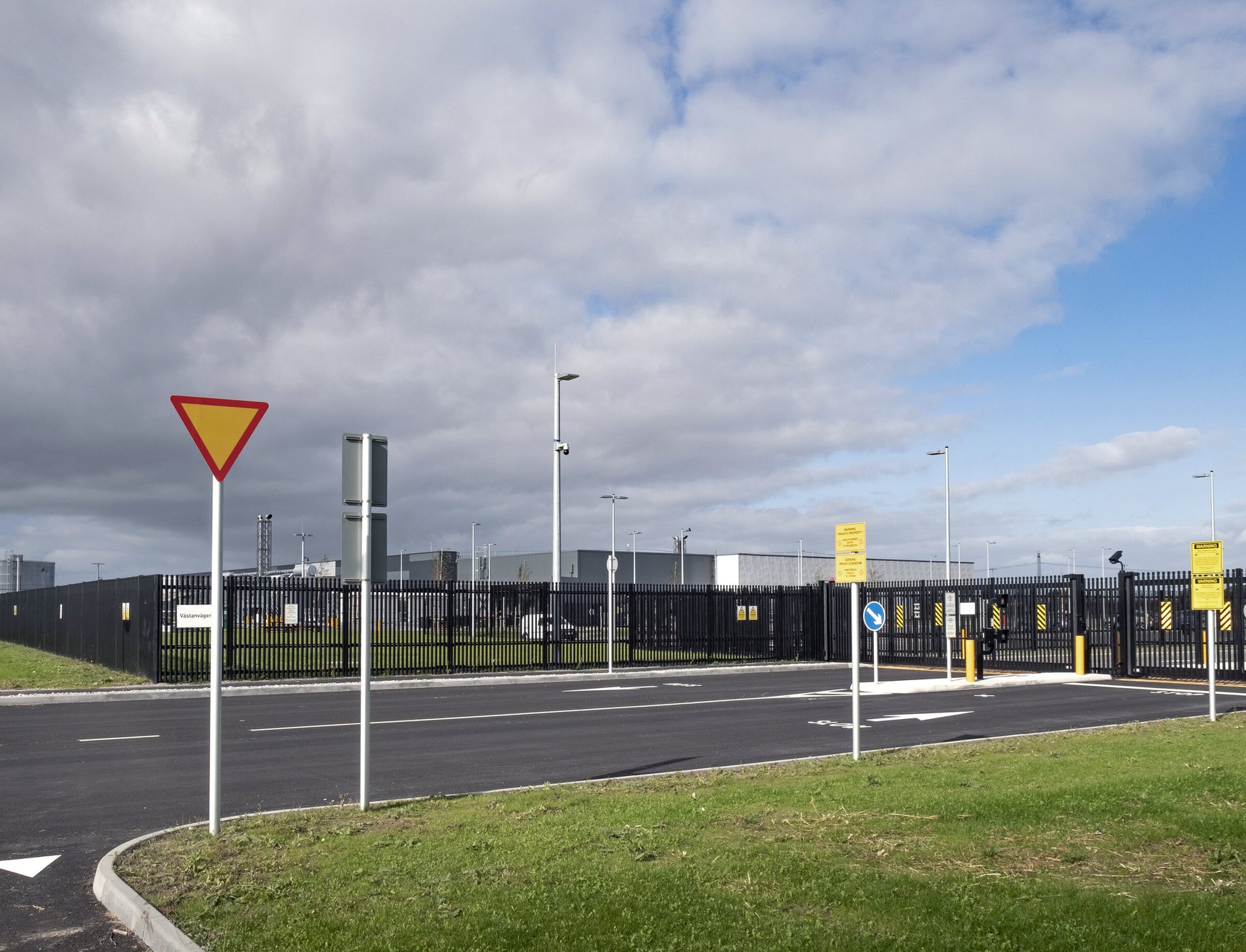
Cover photo: “20210925 Microsoft datacenter i Staffanstorp 60 (51515782920)”, News Oresund, CC BY 2.0, modified.
Frequently asked questions
What does the Microsoft data centre mean for Kirkkonummi?
The Microsoft data centre brings Kirkkonummi a building site first and then a facility where, once the first phase is complete, about 50 people will work in each building. Permanent jobs will therefore be fewer than the size of the site might suggest. The biggest lasting benefit may be waste heat, which is fed into the regional district heating network.
What do the Greens' conditions for data centres contain?
On 26 September 2026, at the party council in Oulu, the Greens decided that data centres can be built in Finland when environmental harm is kept within strict limits and the project leaves real benefit in Finland. On nature, the polluter pays. The builder first looks for a site on already built land, keeps the harm small and compensates for the rest.
Why should the same rules apply to all industry?
A forest suffers just as much whether a data centre, a factory or a hydrogen plant is built on it. I therefore propose that the same conditions apply to all large users of electricity and land, whatever their sector. In the Greens' text, compensation already covers all land use, but the waste heat plan, the flexibility obligation and the publication of information are written only for data centres.
How does the Microsoft data centre affect the price of electricity?
Fingrid, the transmission system operator, has received connection enquiries from data centres totalling over 50,000 megawatts, and an estimated 10% of them will be built. The effect of the Microsoft data centre and other projects on the price of electricity therefore depends on who gets a connection and on what terms, and on whether new emission-free generation keeps pace with consumption.
How much computing capacity does Finland need by 2030?
Finland should aim for 3–4 gigawatts of AI computing capacity by 2030, and I propose it as a national target. The capacity would be built under the same rules as other large energy use: primarily on already built land and with clean electricity, so that waste heat is used and the information is public from the permit stage.
Other posts
-
Data Centres Can Be Finland's Ace in International Politics
A leaked US cable exposed lobbying against data sovereignty. Data centres can be Finland’s ace in international politics, if we build them on our own terms.
-
Stability Brings Investment, Erratic Policy Drives It Away
Google's €13 billion investment came from a functioning electricity market. A price cap would remove the price signal exactly when it is needed most.
-
Finland Can Turn Electrification Into a Competitive Edge
Caruna is changing owners, but regulation — not ownership — decides the power grid's future. Finland can turn electrification into a competitive edge.